Yuchen’s painting practice arises from a deep emotional sensibility. She is continually drawn
to moments that induce a sense of trance — those instances where the boundary between reality and illusion becomes blurred and where the mind briefly detaches from everyday life.
These are the moments she finds in landscapes, lights, fireworks, dreams, and stories alike.
There is a saying that people live for just a handful of meaningful moments. It feels as though just having a handful of such moments is enough to sustain a person through the long passage of time, allowing them to continue moving forward through an exhausted and weary life.
She thinks that perhaps we carry those moments, and the emotional experiences attached to them, with us until the day we no longer have a future.
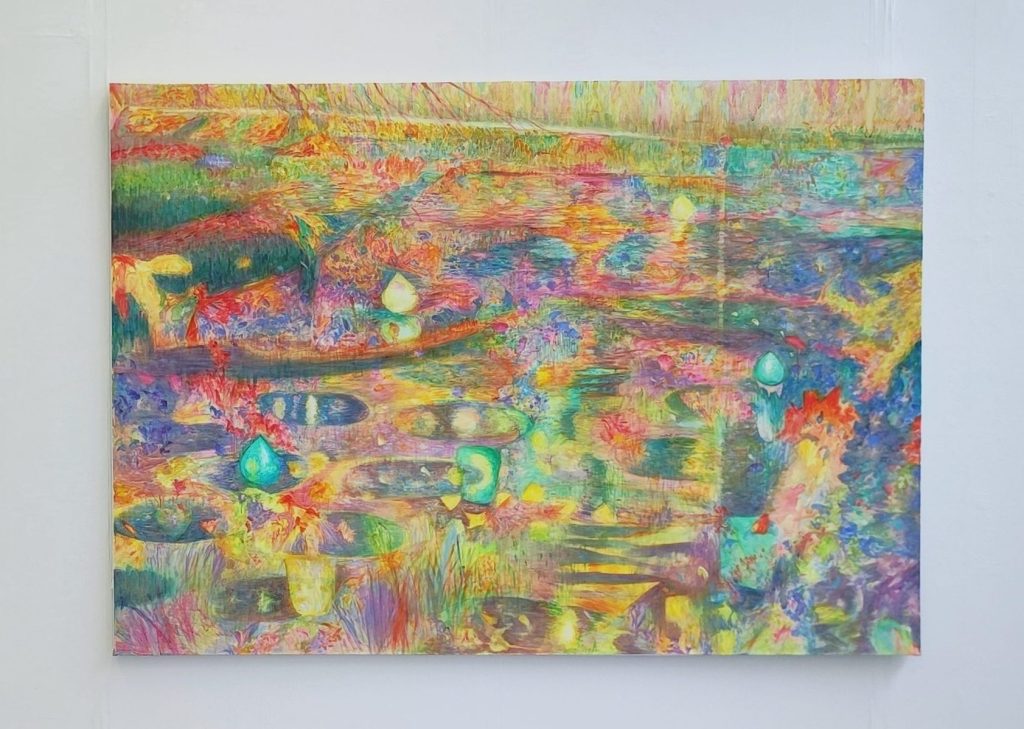
In relation to her paintings, she wants to incorporate the emotional experience brought to her by these trance-like moments, while also creating an environment capable of evoking similar experiences.
For her, painting is not the depiction of an external landscape, but the reimagining and construction of a visual environment capable of holding emotion, spirit and vitality.
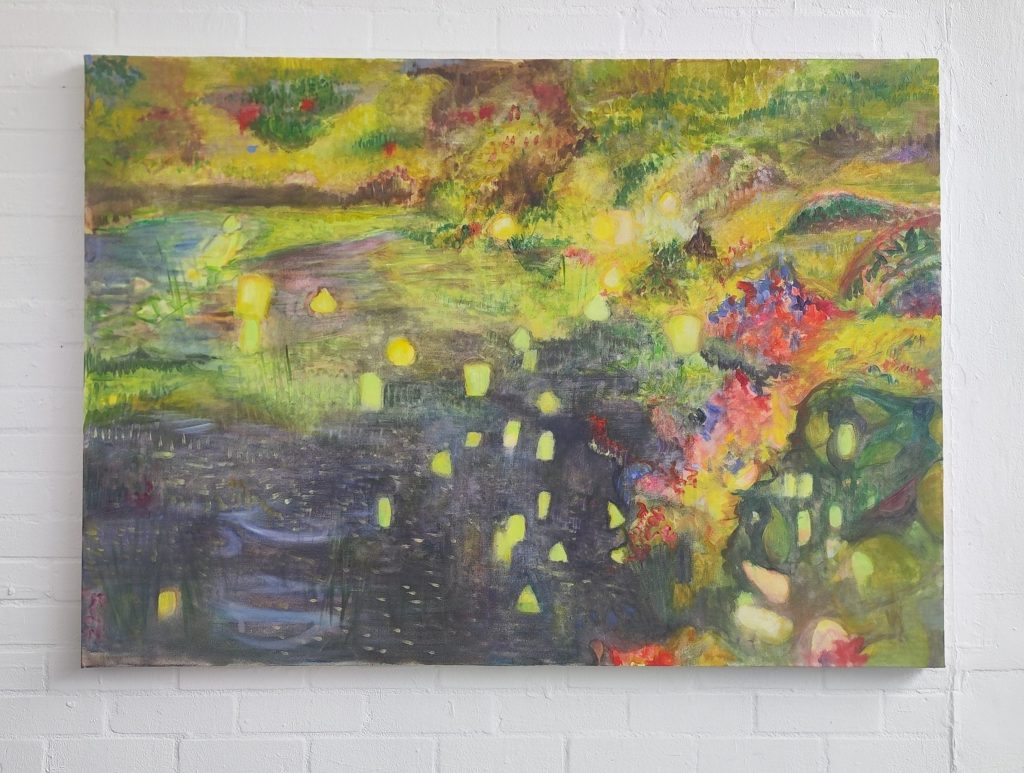
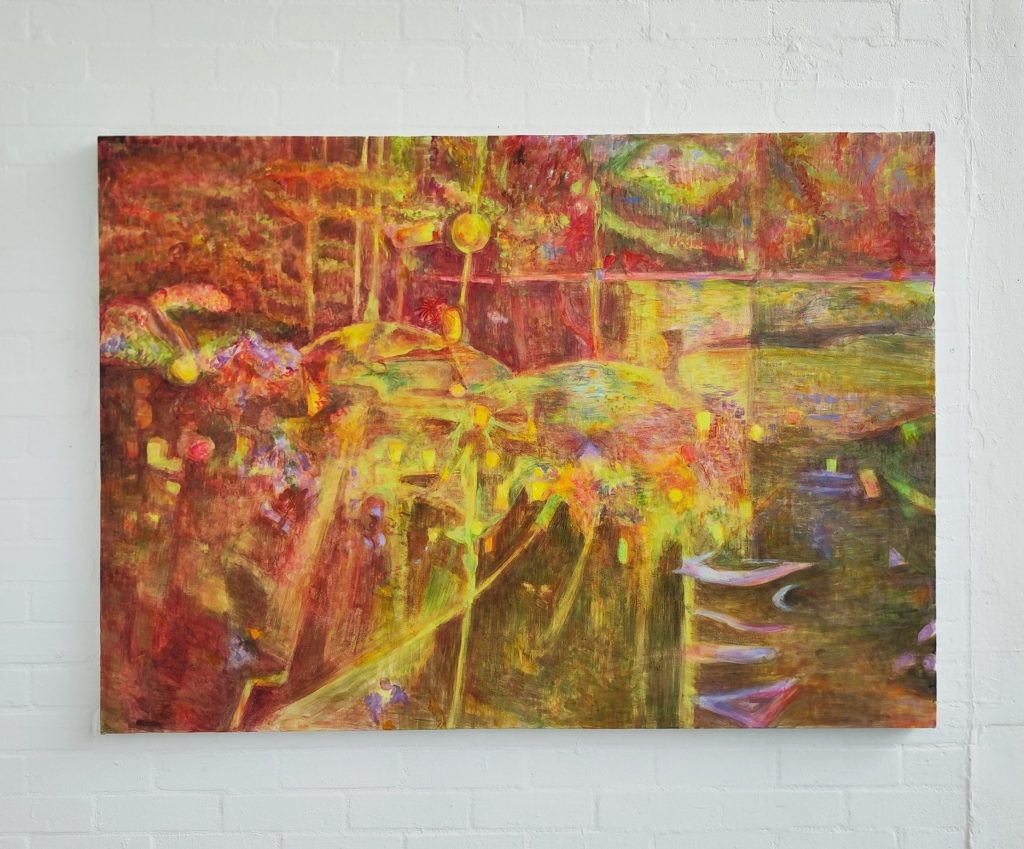
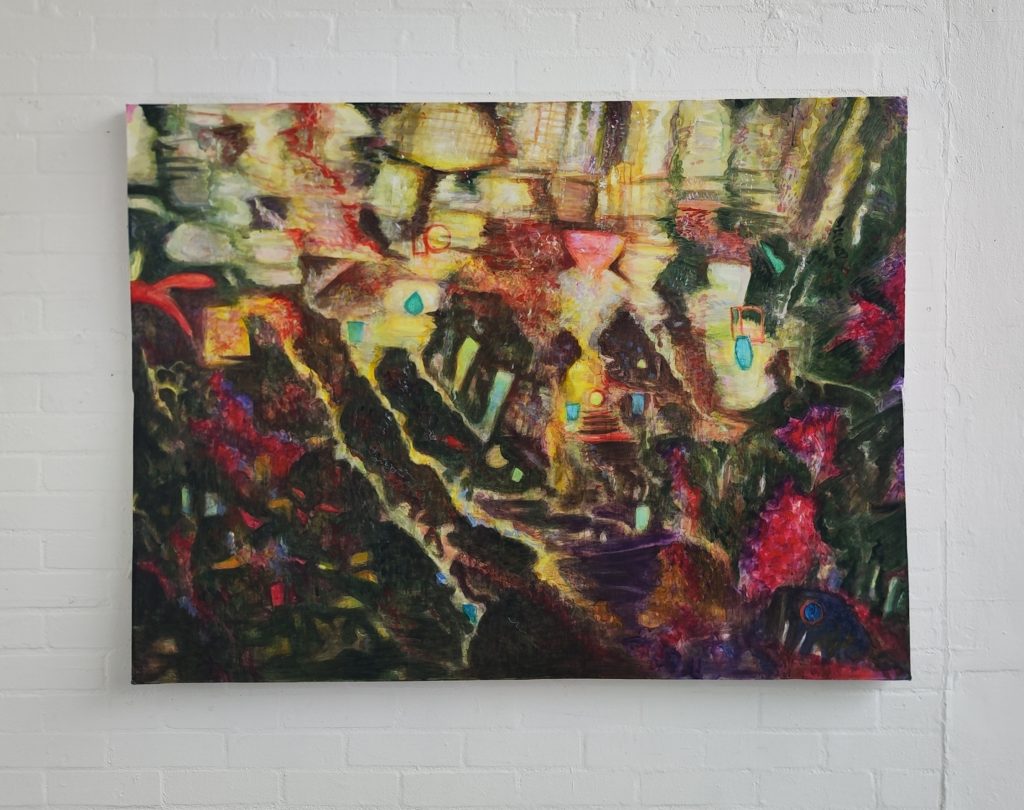
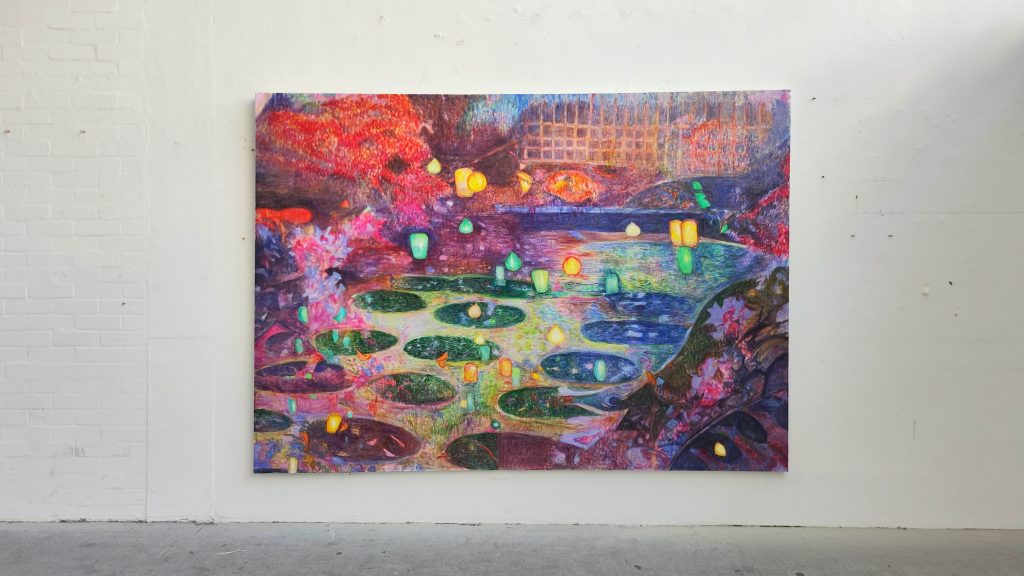
Her imagery is shaped by both natural and cultural experiences. Plants, landscapes, light sources and fireworks appear repeatedly in her work.These motifs not only function as visual elements; they carry cultural memory and attachment.
In her recent practice, these motifs are relocated into dreamlike, suspended spaces, becoming components in building psychological landscapes.
Through these images, she hopes to explore whether, in an era defined by competition and exhaustion, individuals can still access forgotten forms of energy, imagination and inner movement.
Methodologically, layering is an essential approach in her paintings. This layered approach mirrors the logic of her painting, where glaze and wet-on-wet techniques allow images to accumulate, dissolve and re-form. She often uses glazing mediums, which lend a translucent depth to the surface and emphasise the temporal quality of layered construction.
She regards the process of building layers as a way of examining psychological space — each layer resembling a fragment of consciousness, memory or emotion.
The places she constructs carry qualities of dream, uncertainty and organic transformation.They do not belong to external reality, yet they address emotional and psychological experiences within it.
Through reimagined landscapes, she aims to create alternative spaces that can contain vitality and imagination — spaces where the individual can rest and suspend. These painted environments become shelters for forms of life and inner movement
that today’s society often suppresses.
She looks forward to painting as a way to understand today’s spiritual condition.